
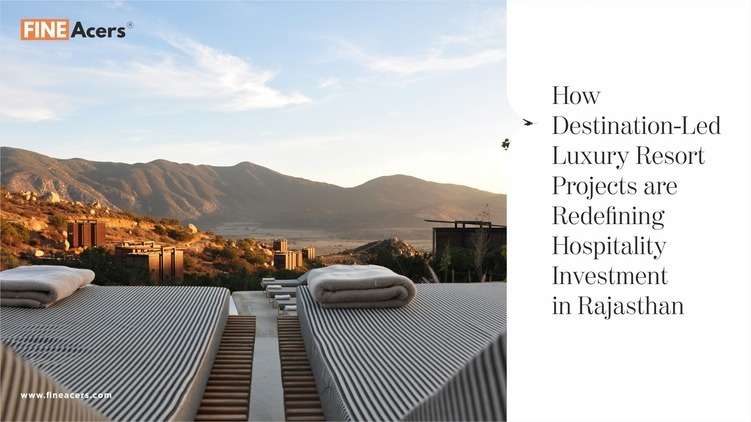
Rajasthan has long been synonymous with grandeur—palaces, forts, desert landscapes, and a rich cultural legacy. But over the past few years, a significant transformation has been unfolding beneath this heritage-driven identity. The state is now emerging as a destination-led luxury investment hub, where hospitality is no longer just about accommodation—it is about curated experiences, emotional connection, and long-term asset value.
This shift is redefining how investors perceive hospitality projects, moving from traditional hotel ownership to destination-driven, experience-first luxury resort investments.
The Tourism Backbone Driving the Shift
The evolution of Rajasthan’s hospitality sector is no longer just a trend—it is backed by strong, consistent growth in tourism demand.
In 2025, Rajasthan recorded over 25.44 crore tourist visits, marking an approximate 9–10% year-on-year growth, with the overwhelming majority driven by domestic travellers. This scale of footfall places Rajasthan among the most powerful tourism economies in India.
What makes this data even more relevant for investors is the pattern of growth:
- Tourism demand is now year-round, not seasonal
- Travel is expanding beyond core cities into emerging destinations
- A strong shift toward experience-driven travel is evident
- Luxury and boutique hospitality demand is rising significantly
This is not just growth—it is structural demand evolution, and it is precisely what is fueling the rise of destination-led luxury resort investments across Rajasthan.
From Hotels to Destinations: The New Investment Philosophy
Traditional hospitality investments focused on urban hotels, occupancy rates, and location convenience. In contrast, destination-led projects prioritize:
- Unique landscapes (Jawai, Pushkar, Aravallis)
- Experience-driven design
- Cultural integration
- Low-density luxury developments
In Rajasthan, resorts are no longer just built in a location—they are built around the identity of the location.
For example:
- Udaipur blends lakeside luxury with royal heritage
- Jawai offers raw wildlife and nature-led experiences
- Pushkar combines spirituality with boutique luxury
- Jaipur outskirts (Amer/Aravalli) deliver royal aesthetics with modern hospitality
This transformation aligns with global travel behavior, where experiences define destination choice.
Experiential Tourism: The Core Growth Driver
Modern travelers are investing in memories, not just stays. The demand has shifted from “where to stay” to “what to experience.”
Rajasthan, with its festivals, wildlife, architecture, and cultural richness, is uniquely positioned to capitalize on this shift.
Luxury resorts today are designed to offer:
- Cultural immersion and storytelling
- Wildlife and nature experiences
- Wellness and slow-living retreats
- Private, curated luxury experiences
This shift is increasing:
- Average room values
- Occupancy stability
- Brand-driven demand
Ultimately translating into stronger investment fundamentals.
Rising Demand Meets Limited Luxury Supply
One of the most compelling factors driving investment is the gap between demand and supply in the luxury segment.
India’s luxury hospitality market is witnessing:
- Rapid growth in affluent travelers
- Increasing spending on premium experiences
- Limited inventory of high-quality luxury rooms
Rajasthan, being a global tourism brand, sits at the center of this demand-supply imbalance—creating a high-potential entry point for new luxury resort developments.
The Emergence of New Investment Models
Destination-led resort projects are also transforming how people invest in hospitality.
Instead of conventional ownership, the market is shifting toward structured models such as:
- Fractional ownership
- Co-ownership
- Sale-Lease-Back (SLB)
- Professionally managed resort assets
These models offer:
- Predictable and structured returns
- Minimal operational involvement
- Long-term capital appreciation
- Scalable investment formats
This evolution is making hospitality investment more accessible, strategic, and performance-driven.
Government Push & Infrastructure Growth
The Rajasthan government continues to strengthen the tourism ecosystem through:
- Industry recognition for tourism
- Investment-friendly policies
- Promotion of heritage and luxury tourism
- Continuous infrastructure development
Improved connectivity, road networks, and airport expansion are unlocking new micro-destinations, further boosting investor confidence.
Why Rajasthan is Leading the Destination-Led Investment Movement
Rajasthan stands apart due to a unique combination of factors:
1. Diverse Destination Portfolio
From lakes to deserts, wildlife to heritage—few regions offer such diversity.
2. Strong Domestic Tourism Engine
High and consistent domestic travel ensures steady demand.
3. Cultural Depth & Global Appeal
A destination that naturally attracts both Indian and international travelers.
4. Emerging Luxury Demand
A clear shift toward boutique, branded, and experience-led hospitality.
5. Scalable Investment Opportunities
Multiple destinations at different stages of growth offer entry flexibility.
The Future: Investment Meets Experience
The future of hospitality investment in Rajasthan lies at the intersection of:
- Destination strength
- Experience design
- Brand-led development
- Structured investment models
Investors are no longer investing in just real estate—they are investing in destinations that perform, experiences that scale, and assets that appreciate.
Destination-led luxury resorts are not just redefining hospitality—they are redefining how modern investments are built around lifestyle, demand, and long-term value creation.