
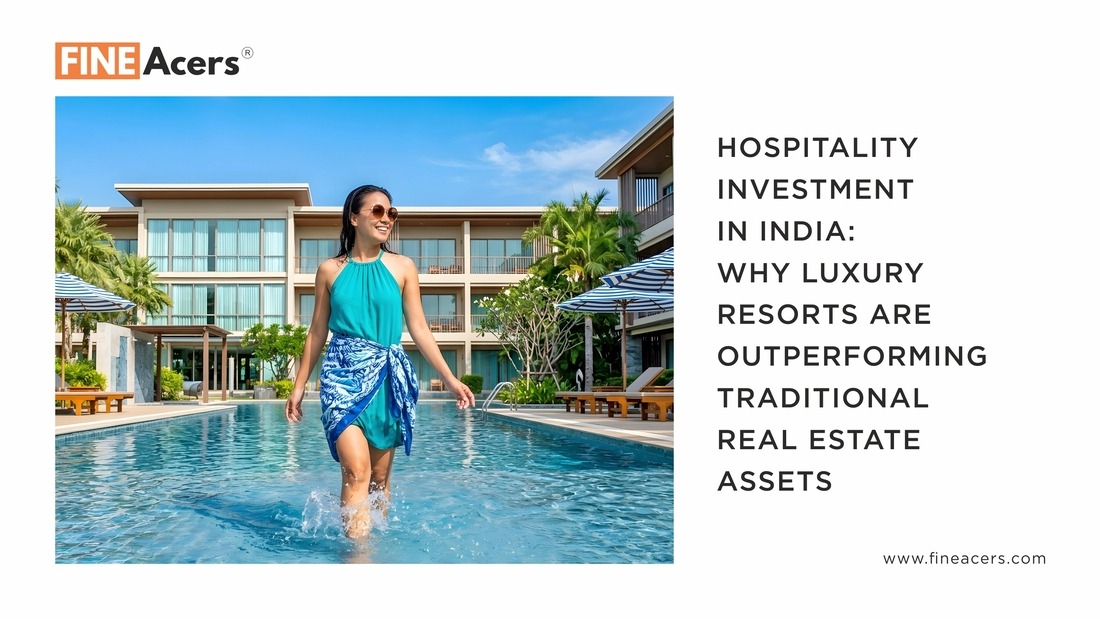
Over the past decade, India’s real estate landscape has undergone a significant transformation. While residential apartments, commercial offices, and plotted developments have long been considered the preferred asset classes for investors, a new segment has emerged as one of the most promising opportunities in the market—luxury hospitality real estate.
Driven by the rapid growth of tourism, increasing disposable incomes, changing travel preferences, and the rise of experiential living, luxury resorts are increasingly outperforming many traditional real estate assets in terms of revenue generation, asset appreciation, and lifestyle value.
As investors seek alternatives that offer more than passive ownership, hospitality-led investments are becoming an attractive proposition for both seasoned and first-time investors.
The Shift from Conventional Real Estate to Experience-Based Assets
Traditional real estate investments often rely on two key factors:
- Rental income
- Capital appreciation
While these fundamentals remain important, investors today are looking for assets that can generate multiple value streams simultaneously.
Luxury resorts have emerged as a category that combines:
- Recurring income potential
- Long-term asset appreciation
- Lifestyle privileges
- Hospitality-driven demand
- Professional asset management
Unlike conventional properties that may remain vacant for extended periods, hospitality assets are designed to generate revenue through continuous guest occupancy and tourism demand.
India’s Tourism Boom Is Creating New Investment Opportunities
India’s tourism and hospitality sector has witnessed remarkable growth in recent years.
Domestic tourism continues to reach record levels, while international travel to India is steadily increasing. Simultaneously, affluent Indian travellers are spending more on premium experiences, wellness retreats, luxury stays, nature-based vacations, and destination-centric travel.
This demand is fueling the expansion of luxury resorts across destinations such as:
- Goa
- Udaipur
- Coorg
- Jaipur
- Jawai
- Pushkar
- Sakleshpur
As these destinations mature, hospitality assets located in them benefit from both tourism-driven revenues and increasing land values.
Why Luxury Resorts Are Outperforming Traditional Real Estate
1. Multiple Revenue Streams
A residential apartment typically generates income through rent.
Luxury resorts, on the other hand, generate revenues through:
- Room inventory
- Food and beverage services
- Events and celebrations
- Wellness experiences
- Corporate retreats
- Tourism activities
This diversified income structure strengthens overall earning potential.
2. Stronger Demand Dynamics
Tourism demand continues regardless of whether guests own property in a destination.
People travel year-round for:
- Leisure
- Family vacations
- Business retreats
- Wellness holidays
- Destination events
This ongoing demand supports hospitality performance and occupancy.
3. Professional Management
One of the challenges of conventional real estate is active management.
Luxury hospitality assets are typically operated by professional hospitality teams, allowing investors to benefit from expert management while avoiding operational responsibilities.
This creates a more passive ownership experience.
4. Asset Appreciation in Emerging Destinations
Locations such as Coorg, Jawai, Pushkar, and Sakleshpur are witnessing increasing interest from luxury travellers.
As hospitality infrastructure expands, these destinations often experience significant land and property value appreciation, benefiting early investors.
5. Lifestyle Benefits Beyond Financial Returns
Traditional real estate generally offers financial benefits alone.
Hospitality investments provide investors with access to:
- Luxury stays
- Exclusive member privileges
- Premium hospitality experiences
- Curated travel opportunities
This creates value that extends beyond monetary returns.
The Rise of Branded Resort Ownership
Globally, branded residences and branded resorts have become one of the fastest-growing segments in luxury real estate.
Investors increasingly prefer assets associated with established hospitality brands because they offer:
- Greater credibility
- Professional operations
- Enhanced guest experience
- Stronger market positioning
- Better long-term visibility
Branded hospitality assets are often perceived as more resilient and desirable compared to standalone properties.
The Fine Acers Approach
Fine Acers has emerged as one of India’s pioneering luxury resort development companies, focusing on hospitality-led investment opportunities across some of the country’s most desirable destinations.
Its portfolio includes premium developments across:
- Goa
- Udaipur
- Jaipur
- Coorg
- Jawai
- Pushkar
- Sakleshpur
With partnerships, branded hospitality concepts, and innovative investment structures, Fine Acers aims to bridge the gap between luxury real estate ownership and hospitality-driven wealth creation.
The company has also been instrumental in popularising the Sale-Lease-Back (SLB) model, enabling investors to participate in professionally managed hospitality assets while benefiting from structured returns and long-term growth potential.
Why the Future Looks Bright for Hospitality Investments
Several macroeconomic trends support the long-term outlook for hospitality real estate:
- Rising domestic tourism
- Growing affluent traveller base
- Increased demand for experiential travel
- Expansion of luxury hospitality brands
- Infrastructure development across emerging destinations
- Preference for passive income-generating assets
As these trends continue, luxury resorts are expected to remain one of the most attractive real estate asset classes for forward-looking investors.
Conclusion
The future of real estate investment is no longer defined solely by ownership—it is increasingly defined by experience, utility, and income-generating potential.
Luxury resorts represent a new generation of real estate assets that combine hospitality, lifestyle, and financial performance within a single investment.
For investors seeking a diversified approach to wealth creation, professionally managed hospitality assets offer a compelling alternative to traditional residential and commercial real estate.
As tourism continues to expand and destination-led developments gain momentum, luxury resort investments are well-positioned to play a leading role in India’s next real estate growth story.