
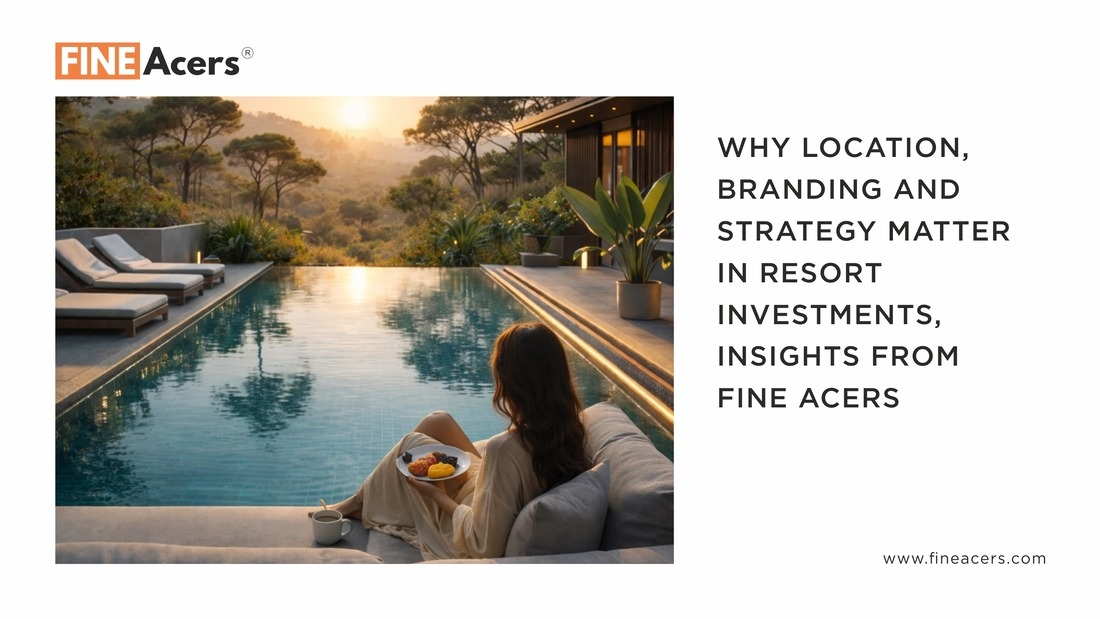
Introduction: A Successful Resort Investment Begins Before Construction
A luxury resort may be admired for its architecture, landscaped surroundings, spacious rooms and premium amenities. However, the long-term potential of a resort investment is determined much earlier—before the first foundation is laid or the first guest arrives.
It begins with three fundamental decisions:
Where should the resort be developed?
What hospitality identity should it represent?
How should the asset be structured, operated and positioned for the future?
These decisions represent the three essential pillars of resort investment: location, branding and strategy.
A resort built in the wrong destination may struggle despite excellent design. A well-located property may fail to establish itself without credible branding and professional management. A recognised brand alone cannot create value if the development lacks a clear operating, ownership and market strategy.
Fine Acers approaches resort development by bringing these three pillars together. As a luxury resort developer and hospitality asset creator, Fine Acers identifies promising tourism destinations, develops branded resorts and residences, structures ownership opportunities and creates professionally managed hospitality assets across India.
Its portfolio spans Jaipur, Udaipur, Goa, Jawai, Coorg, Pushkar and Sakleshpur—destinations selected not merely for their popularity, but for their individual tourism identities, landscapes, connectivity and long-term hospitality potential.
Resort Investment Is More Than Buying Property
Traditional real estate investment often begins with the physical property: the size of the unit, construction quality, nearby infrastructure and expected appreciation.
Resort investment requires a wider perspective.
The property is part of an operating hospitality business. Its potential is influenced by guest demand, destination appeal, room positioning, occupancy, service quality, marketing, reputation, operating costs and the overall travel experience.
An investor is therefore not simply purchasing a room, villa or resort unit. The investor is participating in a hospitality ecosystem.
That ecosystem must attract guests, create memorable experiences, maintain standards, build a reputation and remain commercially relevant across changing travel trends.
This is why location, branding and strategy cannot be considered separately. They must function as one integrated development framework.
Location: The Foundation of Every Resort Investment
In residential real estate, location influences convenience and appreciation. In resort development, location determines the experience itself.
Travelers usually select a resort because they want to experience a particular destination. They may be looking for a coastal holiday, a heritage escape, a wildlife retreat, a wellness experience, a spiritual destination or a peaceful break surrounded by nature.
The destination gives the resort its purpose.
Tourism Identity Matters
A successful resort destination should have a clear identity that guests can understand and value.
Goa is associated with coastal leisure and vibrant holiday experiences. Udaipur represents lakes, palaces, heritage and premium hospitality. Jawai offers wildlife, dramatic landscapes and experiential luxury. Coorg and Sakleshpur are connected with greenery, plantations, wellness and nature-led travel.
Jaipur combines culture, heritage, connectivity and luxury tourism, while Pushkar brings together spirituality, history, culture and leisure.
Each destination appeals to a different traveler profile. This allows the resort concept to be designed around genuine demand rather than creating a generic property that could exist anywhere.
Accessibility Shapes Hospitality Demand
Natural beauty alone does not guarantee the success of a resort destination.
Guests must be able to reach the property conveniently. Road networks, airports, railway access and proximity to established tourism circuits can significantly influence demand.
A destination with improving connectivity may also benefit from greater visibility and future growth. This is why location evaluation must examine both the current travel ecosystem and the infrastructure expected to develop around it.
The Surrounding Landscape Creates the Experience
The best resort destinations do not treat the landscape as a backdrop. They make it part of the hospitality experience.
A lake, forest, plantation, hill, coastline, heritage setting or wildlife environment can shape the architecture, room views, dining, wellness activities and guest experiences.
Fine Acers’ land-to-resort philosophy focuses on transforming thoughtfully selected locations into hospitality assets that remain connected to their surroundings.
The aim is not merely to place a building on land. It is to create a destination-led resort where architecture and landscape work together.
Destination Diversification Reduces Dependence
A hospitality portfolio concentrated in only one market may be exposed to regional demand cycles or seasonality.
Fine Acers’ presence across heritage, coastal, wildlife, spiritual and nature-oriented destinations provides a more diversified development approach.
Jaipur and Udaipur serve heritage and premium leisure markets. Goa attracts coastal tourism. Jawai serves experiential and wildlife travel. Pushkar combines cultural and spiritual demand. Coorg and Sakleshpur appeal to wellness, greenery and short luxury escapes.
This diversity helps Fine Acers build hospitality assets across multiple tourism segments instead of relying on one destination category.
Branding: Turning a Property into a Recognised Hospitality Asset
Location can bring travelers to a destination, but branding influences which property they choose.
A hospitality brand communicates expectations. It tells the traveler what level of service, experience, comfort and professionalism the resort intends to provide.
For investors, branding can strengthen the identity and positioning of the underlying asset.
Branding Creates Guest Confidence
Guests making premium travel decisions often seek reliability. They want confidence in room quality, service, cleanliness, food, amenities and the overall experience.
A recognised hospitality identity can reduce uncertainty and give travelers a clearer reason to choose one resort over another.
This trust becomes especially important in destinations where multiple independent properties compete for the same guests.
Brand Standards Support Consistency
A luxury resort must consistently deliver more than attractive interiors.
It must maintain service protocols, staff training, housekeeping quality, food standards, guest communication, reservation systems and property upkeep.
Branded hospitality generally introduces structured standards across these areas. These systems help the resort maintain consistency as it grows and serves a wider guest base.
Branding Strengthens Market Positioning
A resort needs a clear place in the market.
Is it a wellness retreat, wildlife escape, luxury leisure resort, premium family destination or heritage-led hospitality experience?
The brand and resort concept should answer this question clearly.
Effective positioning helps determine the design, amenities, pricing, guest profile, marketing communication and overall experience.
Fine Acers works with established hospitality brands and distinctive resort concepts to ensure that each development has an identifiable market position.
Fine Acers’ Branded Hospitality Portfolio
The Fine Acers portfolio includes:
- Dolce Resorts by Wyndham in Goa and Udaipur
- KAMAH Hotels & Resorts under Trademark Collection by Wyndham in Jawai and Coorg
- Wyndham Grand Jaipur Amer in Jaipur
- Re:Gen Resort & Spa in Pushkar
- The Ame Resorts in Sakleshpur
These hospitality identities connect the distinct character of each destination with organised branding, professional positioning and defined guest experiences.
For an investor, this can offer greater confidence than owning an isolated holiday property without an established operating framework.
Strategy: The Element That Connects Everything
A strong location and credible brand are valuable, but they require the right strategy to create a functioning investment asset.
Strategy determines how land will be developed, how the resort will be positioned, how ownership will be structured, how operations will be managed and how the asset will remain relevant over time.
Destination and Product Must Match
Not every resort concept is suitable for every destination.
A wildlife destination may require low-density development, privacy and immersive outdoor experiences. A coastal resort may focus on leisure, recreation and longer stays. A wellness destination may need specialised spaces for rejuvenation, nature and mindful experiences.
Fine Acers studies the destination before defining the resort concept. This helps align the product with the expectations of the guests likely to visit the location.
Master Planning Influences Long-Term Performance
Resort planning is different from ordinary real estate development.
Guest movement, privacy, views, landscaping, recreational areas, restaurants, back-of-house operations and service access must all work together.
Poor planning can increase operating costs or weaken the guest experience. Thoughtful planning can make the resort easier to operate, more enjoyable to visit and more valuable over the long term.
Fine Acers’ strategy includes architecture, infrastructure, landscaping, construction execution and hospitality requirements within one development vision.
Ownership and Operations Must Be Clearly Separated
Many investors want exposure to hospitality real estate but do not want to manage guests, staff, reservations or maintenance.
Fine Acers addresses this through professionally managed resort ownership and Sale-Lease-Back structures, where applicable.
Under the broad structure, the investor owns the designated asset while Fine Acers or the appointed hospitality operator manages the resort operations.
This provides the investor with ownership without the day-to-day responsibilities associated with running a hospitality property.
Professional Management Is Essential
A resort must be actively managed to maintain its positioning.
Professional operations include:
- Guest acquisition and reservation management
- Room pricing and revenue strategy
- Property maintenance
- Housekeeping and guest services
- Food and beverage operations
- Staff recruitment and training
- Digital distribution
- Reputation management
- Brand compliance
- Marketing and promotional planning
These responsibilities require specialised teams and operational systems.
The Fine Acers model is designed to make the resort an actively managed hospitality asset rather than a collection of independently operated units.
Strategy Must Consider the Entire Asset Lifecycle
A resort investment should not be evaluated only at the time of purchase.
Investors should also consider construction, operations, maintenance, future refurbishment, ownership benefits and possible exit arrangements.
Selected Fine Acers projects may include benefits such as assured returns, assured buyback, complimentary holidays, registered ownership and easy payment plans, depending on the project structure.
These elements form part of the broader investment strategy and should always be assessed through official documentation.
What Happens When One Pillar Is Missing?
The relationship between location, branding and strategy becomes clearer when one of the elements is absent.
A Strong Location Without Branding
A resort may be surrounded by natural beauty, but without credible positioning and operating standards, it may struggle to stand apart from competing properties.
The destination may attract visitors, but the resort must still earn their trust.
Branding Without the Right Location
A recognised brand cannot permanently compensate for weak demand, poor accessibility or a destination that does not match the proposed hospitality concept.
Branding can strengthen an opportunity, but it cannot create sustainable tourism demand where none exists.
Location and Branding Without Strategy
Even a promising destination and strong hospitality identity can underperform if the project is poorly planned, improperly structured or inconsistently operated.
Strategy connects the destination, brand, development, ownership and operating model.
This is why Fine Acers evaluates resort opportunities as complete hospitality ecosystems rather than standalone property transactions.
The Fine Acers Integrated Development Approach
Fine Acers’ approach can be understood through six connected stages.
1. Destination Identification
The process begins by evaluating tourism appeal, connectivity, landscape, demand and long-term development potential.
2. Concept and Brand Alignment
The resort concept is designed around the identity of the destination and aligned with the appropriate hospitality positioning.
3. Land-to-Resort Development
The selected land is transformed through planning, architecture, construction, infrastructure and landscape development.
4. Ownership Structuring
Investment opportunities are structured to provide clarity regarding ownership, returns, lifestyle privileges and operating arrangements.
5. Professional Resort Operations
Hospitality specialists manage the resort’s guests, staff, marketing, maintenance and revenue-related activities.
6. Long-Term Asset Management
The resort is maintained and positioned as an ongoing hospitality asset rather than a completed real estate project with no continuing management.
This integrated approach enables Fine Acers to develop hospitality assets across multiple destinations while maintaining a consistent investment and operating philosophy.
How These Three Pillars Support Investor Value
When location, branding and strategy are aligned, they can support several dimensions of investor value.
Hospitality-Led Income Potential
A professionally operated resort can participate in guest demand while the investor remains free from daily operational responsibility.
Asset Appreciation Potential
Destination development, infrastructure, resort maturity and brand positioning may contribute to the long-term value of the underlying asset.
Lifestyle Benefits
Depending on the project, investors may receive complimentary domestic or international stays and access to premium resort experiences.
Hassle-Free Ownership
Professional management means that investors do not have to manage tenants, bookings, staff, upkeep or guest concerns independently.
Exit Visibility
Selected projects may provide assured buyback arrangements under documented terms, giving investors greater clarity regarding a possible future exit.
None of these outcomes should be evaluated in isolation. The strength of the opportunity depends on the project documentation, development quality, market conditions and operating structure.
What Investors Should Evaluate Before Investing
A premium location or recognised brand should not replace proper due diligence.
Prospective investors should examine:
- The legal ownership structure
- Project approvals and land documentation
- Construction and completion timelines
- The hospitality brand agreement
- The appointed resort operator
- The lease or operating arrangement
- Return calculation and payment terms
- Maintenance and refurbishment responsibilities
- Complimentary stay conditions
- Assured buyback provisions
- Taxes, charges and deductions
- Exit options and transfer restrictions
The right resort investment should offer transparency across all these areas.
Location, branding and strategy create the foundation, but proper documentation protects the investor’s understanding of the opportunity.
The Future of Destination-Led Resort Investment in India
Indian travel is becoming increasingly experience-oriented.
Travelers are seeking destinations that offer nature, wellness, heritage, privacy, culture and memorable hospitality experiences. At the same time, hospitality development is expanding beyond major metropolitan markets into distinctive tourism locations.
This creates new opportunities for professionally developed resorts and branded hospitality investments.
However, the strongest projects will not be those that simply follow a trend. They will be the developments that choose the right land, understand the destination, select the right hospitality positioning and create a sustainable operating strategy.
Fine Acers’ portfolio across Jaipur, Udaipur, Goa, Jawai, Coorg, Pushkar and Sakleshpur reflects this destination-led approach.
Conclusion: Great Resorts Are Built on More Than Land
A resort investment cannot succeed on location alone. It cannot depend only on a brand name, and it cannot rely solely on financial structuring.
The strongest hospitality assets are created when location, branding and strategy work together.
The location creates the reason to travel.
The brand creates trust and identity.
The strategy transforms both into a professionally managed hospitality asset.
Fine Acers brings these elements together through its land-to-resort development philosophy, branded hospitality portfolio, multi-destination presence and structured resort ownership opportunities.
For investors exploring luxury resort investment in India, understanding these three pillars is essential. A carefully selected destination, credible hospitality identity and well-planned operating structure can make the difference between merely owning property and participating in a long-term hospitality ecosystem.
Explore Resort Ownership with Fine Acers
Fine Acers
Luxury Resort Developer and Hospitality Asset Creator
📞 +91 9351 655 155
🌐 fineacers.com
Disclaimer: Returns, asset appreciation, assured buyback, brand associations, ownership structures, payment plans, complimentary stays and other benefits vary by project. Prospective investors should review all approvals, agreements, financial terms and official project documentation before making an investment decision.